
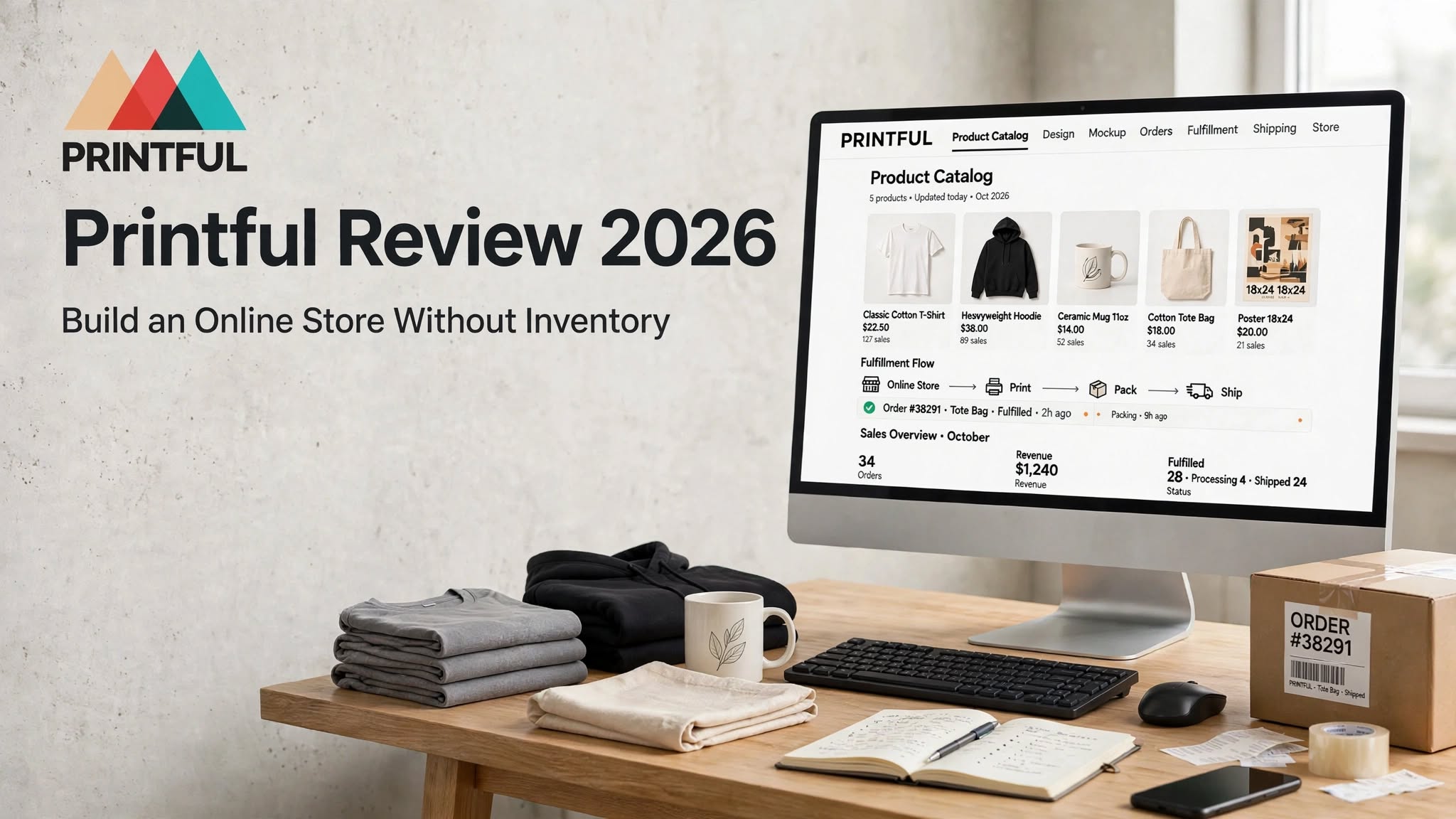

Starting an online store sounds exciting until you think about inventory, storage, packaging, shipping, and unsold products. Printful takes a different approach by allowing you to sell customized products without purchasing or storing inventory yourself.
With Printful, you can choose products, add your designs, connect your online store, and let the platform handle printing, packing, and shipping after a customer places an order.
But is Printful actually a good option for starting a print-on-demand business in 2026? In this Printful review, we’ll look at its features, products, pricing, fulfillment process, pros and cons, integrations, and whether it makes sense for new and experienced ecommerce sellers.
What Is Printful?

Printful is a print-on-demand and ecommerce fulfillment platform that allows businesses and creators to sell customized products online.
Instead of purchasing hundreds of T-shirts, hoodies, mugs, posters, or other products upfront, you create products digitally and list them in your store. When someone places an order, Printful produces the item and ships it to the customer.
This inventory-free model can reduce the upfront risk associated with traditional ecommerce.
Printful is designed for a variety of users, including:
- Online entrepreneurs
- Artists and designers
- Content creators
- Influencers
- Merch sellers
How Does Printful Work?
Printful’s basic process is relatively simple.
Step 1: Choose a Product
Start by selecting a product from the Printful catalog.
Depending on your business and target audience, you can choose apparel, accessories, home products, and other customizable merchandise.
Step 2: Add Your Design
Upload your artwork or create a design using Printful’s available design tools.
You can place your design on the selected product and preview how it should look before adding it to your store.
Step 3: Create Your Product Listing
Once the product looks right, you can create product information, choose pricing, and prepare your listing.
You can then publish the product to a connected ecommerce store or marketplace.
Step 4: Customer Places an Order
When a customer purchases the product, the order is automatically sent to Printful through the store integration.
You don’t have to manually send every order to the fulfillment company.
Step 5: Printful Produces and Ships
Printful handles production, fulfillment, packaging, and shipping.
The finished product is sent directly to the customer, while you focus on your store, branding, customer service, and marketing.
Printful Features

Printful offers a combination of product creation, fulfillment, ecommerce integrations, and branding tools.
Print-on-Demand Fulfillment
The core feature is print-on-demand fulfillment.
Products are produced when orders are placed, meaning sellers don’t need to maintain a warehouse full of merchandise.
Large Product Catalog
Printful offers a broad selection of customizable products.
Popular categories include:
- T-shirts
- Hoodies
- Sweatshirts
- Hats
Design Maker
Printful includes design tools that can help users create product artwork without relying entirely on third-party design software.
You can upload your own designs and customize products before creating your listings.
For beginners, this can make the initial product-creation process easier.
Mockup Generator
Product mockups are important because customers need to see what an item may look like before buying.
Printful provides mockup functionality that lets sellers preview their designs on selected products and use those visuals for product listings.
Automated Order Fulfillment
Once your store is connected, orders can be automatically transferred to Printful.
This reduces the amount of manual work required to process individual purchases.
White-Label Fulfillment
Printful supports a white-label approach, allowing sellers to build their own customer-facing brand instead of making the fulfillment provider the focus of the shopping experience.
Depending on the product and available options, sellers can also use additional branding features.
Printful Products
One of the reasons sellers choose Printful is its product variety.
Clothing
Apparel remains one of the most popular print-on-demand categories.
You can find products such as:
- T-shirts
- Hoodies
- Sweatshirts
- Tank tops
- Jackets
- Leggings
Accessories
You can also create customized accessories such as:
- Hats
- Tote bags
- Bags
- Phone cases
Home and Lifestyle Products
Printful also offers products for customers who aren’t specifically looking for clothing.
Depending on availability, these can include:
- Posters
- Mugs
- Pillows
- Blankets
- Wall art
- Other home products
Printful Integrations
Another major advantage of Printful is that you don’t necessarily need to build your entire ecommerce operation inside Printful.
The platform supports integrations with popular ecommerce platforms and marketplaces, including:
- Shopify
- Etsy
- WooCommerce
- Amazon
For example, a Shopify seller can create products through Printful, publish them to the Shopify store, and have qualifying orders automatically sent to Printful for fulfillment.
Printful Pricing

Printful offers a free plan, which makes it accessible to people who want to test print-on-demand without committing to a recurring subscription.
The Free plan provides access to core features such as product creation, design tools, integrations, and automated fulfillment.
Printful also offers a paid Growth plan for businesses that want additional benefits and product discounts.
However, it’s important to understand that the absence of a monthly subscription doesn’t mean selling products is free.
When a customer places an order, you’ll generally need to account for:
- Product cost
- Printing or fulfillment
- Shipping
- Taxes
How Much Can You Make With Printful?
There is no fixed income amount with Printful.
Your earnings depend on factors such as product selection, pricing, design quality, niche demand, marketing, customer acquisition costs, and store expenses.
For example, imagine you sell a customized shirt for $30.
If your product and fulfillment expenses consume a significant portion of that price, the remaining amount may be relatively small after shipping, transaction fees, advertising, and taxes.
That’s why successful print-on-demand businesses generally focus on more than simply uploading products.
A good strategy includes:
- Choosing a specific niche
- Creating original designs
- Researching competitors
- Calculating complete product costs
Printful Shipping
Shipping is another cost that sellers need to understand before launching a store.
Shipping prices can depend on the product, destination, quantity, fulfillment location, and shipping method.
Because the customer may see shipping as part of the final purchase price, sellers should consider shipping when deciding their retail pricing.
You can also review Printful’s available shipping information before adding products to your store.
For international sellers, shipping and delivery times can vary considerably between destinations, so displaying accurate expectations to customers is important.
Printful Product Quality
Product quality is an important consideration for any print-on-demand business.
The final customer experience depends on the blank product, printing or embroidery method, artwork, sizing, packaging, and shipping.
One useful feature is the ability to order samples.
Ordering samples allows you to personally check:
- Material quality
- Print quality
- Product sizing
- Colors
- Packaging
- Overall appearance
Printful Branding Options
Building a recognizable brand can be difficult when selling generic products.
Printful provides several branding-related options depending on the product and service selected.
These can help create a more consistent experience across your store.
Branding may include options related to:
- Custom labels
- Packaging
- Pack-ins
- Brand presentation
Printful Pros and Cons
Pros
- No need to hold inventory
- Free plan available
- Large selection of customizable products
- Automated order fulfillment
- Multiple ecommerce integrations
- Built-in design tools
- Mockup creation
- White-label fulfillment
- Sample ordering
- Branding options
- Useful for testing new product ideas
Cons
- Product costs can affect profit margins
- Shipping adds to the total cost
- Additional branding can increase expenses
- Not every product has identical fulfillment options
- Marketing is still your responsibility
- Store and marketplace fees are separate
- Profitability requires careful pricing
Who Should Use Printful?

Beginners
Printful can be useful for beginners who want to experiment with ecommerce without purchasing inventory upfront.
You can start with a small number of products and test whether customers respond to your designs.
Content Creators
YouTube creators, social media personalities, streamers, and other creators can use Printful to create merchandise for their audiences.
Instead of managing inventory themselves, they can focus on their audience and promotion.
Artists and Designers
Artists can turn digital artwork into physical products without finding their own manufacturer or fulfillment warehouse.
Small Businesses
Small brands can use print-on-demand to expand their product range without investing heavily in inventory.
Existing Ecommerce Stores
Established ecommerce sellers can use Printful to add customized products alongside their existing catalog.
Is Printful Good for Beginners?
Printful can be relatively beginner-friendly because it removes several traditional ecommerce responsibilities.
You don’t have to:
- Purchase large inventory quantities
- Rent warehouse space
- Manually package every order
- Arrange your own printing equipment
- Ship every order yourself
You still need to find a niche, create attractive products, build product pages, set prices, handle customer communication, and generate traffic.
Printful handles much of the operational fulfillment side, but the business side remains with you.
Tips for Starting a Printful Store
If you’re planning to start a Printful business in 2026, consider these steps:
Choose a Specific Niche
Instead of creating hundreds of unrelated products, start with a clearly defined audience.
Order Samples
Always consider checking your products personally before investing heavily in advertising.
Calculate Your Full Costs
Don’t calculate profit using only the product price. Include shipping, platform fees, payment processing, advertising, taxes, and other expenses.
Focus on Original Designs
Unique designs can make it easier to differentiate your products from generic print-on-demand stores.
Start Small
Test a limited collection before expanding your catalog.
Improve Your Product Pages
Use clear product images, informative descriptions, accurate sizing information, and straightforward pricing.
Final Thoughts
Printful provides a straightforward way to enter the print-on-demand market without purchasing and storing inventory upfront.
Its combination of customizable products, design tools, ecommerce integrations, automated fulfillment, shipping, and branding features makes it possible to operate an online merchandise business without handling production yourself.
The platform doesn’t guarantee profitability, though. Your results will depend heavily on your designs, niche, pricing strategy, marketing, and ability to manage your overall costs.
If you want to test an online product business while keeping inventory requirements low, Printful is a platform worth exploring in 2026. Start with a small collection, order samples, calculate your margins carefully, and expand based on actual customer demand.
